
Good growth in every postcode, and hope in every heart
The state, the voter, and the stage
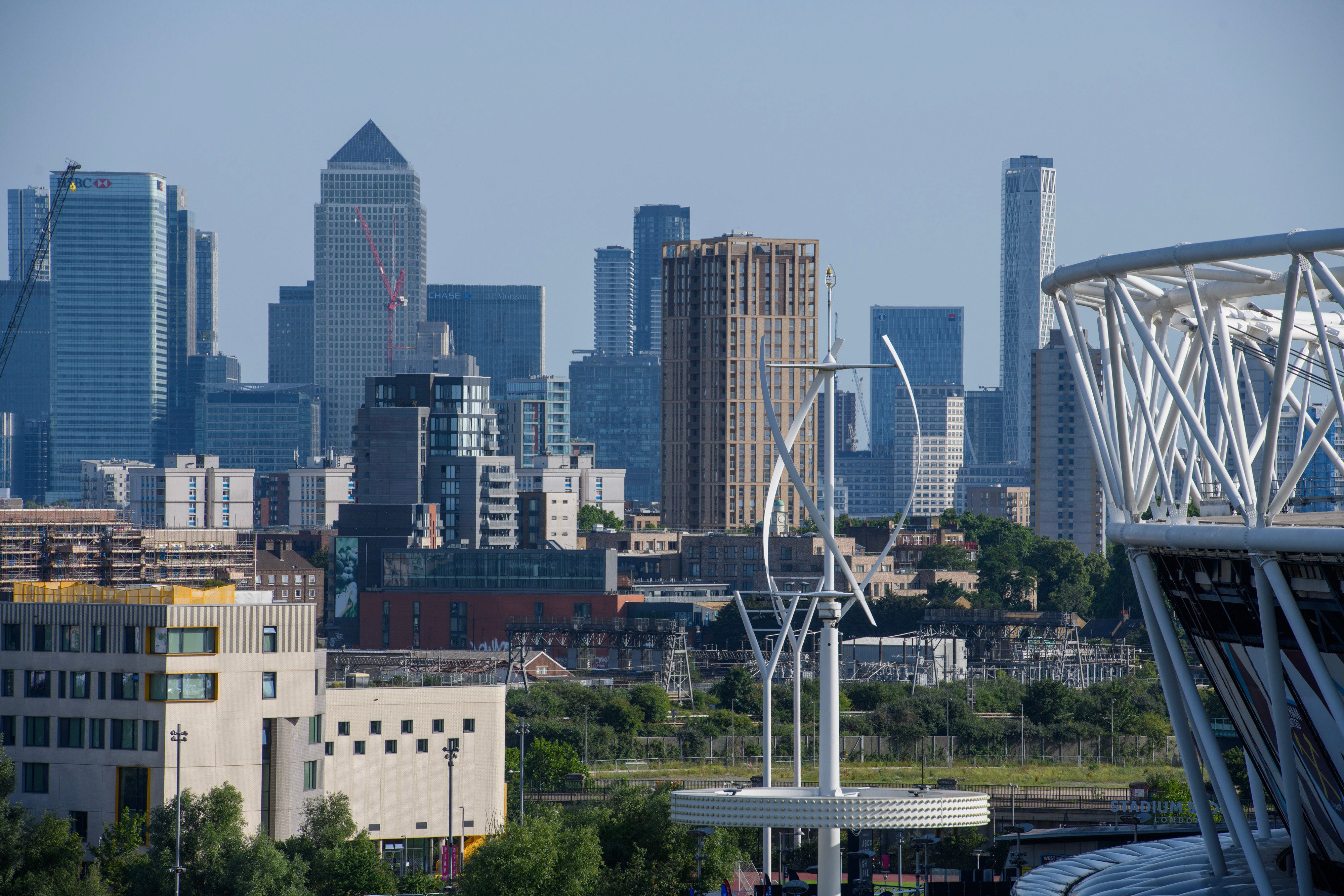
Andy Burnham’s return to Westminster, now MP for Makerfield, has generated a great deal of excitement. Based on selfies alone, he seems to be backed by most of the Parliamentary Labour Party. A dark-horse challenge looks less and less likely, paving the way for a Burnham government. But the real challenge may not be that of becoming Leader of the Labour Party, but of governing effectively and maintaining a hopeful narrative. To avoid the pitfalls of Starmer’s government, Burnham will have to show decisiveness, both in terms of the people he chooses for his cabinet and the policy he embraces.
Tough decisions lie ahead
Andrew Marr writes for the New Statesman:
The biggest choice facing Andy Burnham right now is who he will make his chancellor. People who claim to know his mind say they expect him to decide this weekend: market uncertainty through next week might in itself become a major story. No promises have been made to anybody. This is something for the prime-minister-in-waiting himself to chew over during any quiet moments he gets this weekend in Manchester.
The decision is, anyway, personal, even intimate. The relationship between Prime Ministers and Chancellors is always intense, either creatively or toxically. Will this one be wracked by Blair-Brown tensions, or a smoother Cameron-Osborne partnership? But beyond the personal, it’s politically huge. Get it wrong, and Burnham could face a market crisis even before he’s into Number 10. Get it right, and he could find the fiscal straitjacket loosening quickly, and all sorts of possibilities opening up.
The FT editorial board writes:
For more than 15 years, Britain has endured weak productivity growth and stagnant living standards. Economic shocks — including Brexit, the Covid pandemic and successive surges in energy prices — have played a part. But so too has the failure of successive governments to confront the tough decisions needed to make the country more prosperous. Spending cuts have been shirked, and as a result workers, businesses and investors have been sapped by an ever-rising tax burden. Substantive pro-growth reforms, which often benefit one group at the expense of another, have also been ducked. If Britain is to break out of its economic malaise, Burnham will have to be different.
A major test for the incoming leader will be his government’s handling of fiscal policy. Public investment can help crowd in private sector spending and drive faster growth. There are also growing calls to raise defence expenditure. But the UK’s rising long-term debt trajectory is troubling. The high yields demanded by gilt investors reflect as much. Burnham’s cabinet will need to cut costs and avoid fiddling with the fiscal rules, before making substantial commitments. That means reining in welfare spending even if that upsets a portion of the electorate. The “triple lock” on state pensions — which guarantees that payments rise with the highest of inflation, wage growth or 2.5 per cent — is unsustainable.
Burnham is starting to set out his own economic plans, including a 'No 10 in the North', but the ideas behind them have been brewing for years. Below, some of the visions that could give those plans their substance.
The Productive State
Writing ahead of the launch of Productive State: A Framework for Manchesterism, Mathew Lawrence set out the Manchesterist vision of the state:
The Productive State delivers sovereignty advantages that markets systematically underweight and that the current geopolitical moment makes newly urgent. Price sovereignty: the ability to insulate domestic households and firms from the transmission of global market shocks into bills and input costs. Supply chain sovereignty: maintaining domestic productive capacity for the equipment, components, and materials on which the energy transition depends, rather than trading one geopolitical dependency (imported fossil fuels) for another in the form of imported clean tech goods and capital. And ownership sovereignty: ensuring that essential infrastructure is not progressively acquired by owners whose interests lie elsewhere. In an era of weaponised interdependence, the optionality the Productive State provides – building excess capacity, maintaining strategic reserves, sustaining provision through disruption – is a strategic asset private ownership cannot replicate.
Burnham will likely draw on the ideas of organisations that have been working on devolution for decades. Most recently, Demos laid out its view of the Citizen Economy, which rests on three principles:
First, economic systems which are geared to think ‘citizen’. Economic institutions - be they in central or local government, the financial sector, business networks, public bodies, or anchor institutions - must begin to account for the complex role that citizens play in the economy, be it through the legitimacy citizens provide or the social behaviour they respond with. HM Treasury’s Green Book for example - critical in shaping government funding priorities - considers the strategic, financial, commercial, economic and deliverability cases of a proposal. This subordinates all citizen values to a single cost/benefit analytical frame. In a society characterised by low trust and political fragmentation, the lack of a social or ethical case is increasingly hard to justify.
Second, economic systems with citizen contribution at the core. Rather than designing policies to apply consistently across the country and over time, the government must build systems which citizens can shape and adapt. Demos’s concept of ‘economies of coordination’ reflects this. It recognises that a centralised skills policy cannot adapt to the complex nuances of local economies and developments in policy, supply chains, and labour markets, particularly given coming AI disruption. Instead, the government must embed resilience into skills systems by strengthening coordination between local actors. […]
Third, public participation. By engaging with the public on economic policies, decisionmakers can understand how those policies will affect citizens’ trust and interact with their moral and political beliefs. […]
But not everyone in Labour will agree. Labour Together, rebranded recently as Think Labour, sketched out its own vision. Though it accepts that Britain must reduce regional inequalities, it offers a distinctly technological, investment-focused approach to economic policy. James Howat, Director of Policy, writes in the Progressive Dynamism policy paper:
We […] need to cut the cost of investment. Planning reform remains important. We also need to get interest rates down with a combination of tighter fiscal policy, a higher savings rate and by shifting wealth from housing into gilts. That will require making the argument that it is better to support our deprived communities with investment than lower taxes and cash transfers.
A technological revolution is fast moving and unpredictable. So the creation and diffusion of new technologies will be driven by markets. But only a Labour government can deliver the political settlement for this because we need a strong and activist state to spread the opportunities around the country and to build our resilience to a dangerous world.
If we prioritise redistributing over growing the pie, or focus on the everyday economy at the expense of the frontier one, we will fail to meet the challenges of an ageing population, an expensive energy transition and the breakdown of the geopolitical order. In this world, the truest form of control over our fate will come from having deep technological capabilities, a fast-growing economy and strong public finances.
It would be easy to get stuck in wonky debates over economic policy. True — Starmer’s fall was partially a failure to kickstart the economy and deliver on policy. But it was also a failure of imagination — a lost chance to provide a unifying narrative for Britain.
Voters are no impartial referees
The importance of narratives becomes even clearer once we understand how voters behave. In the folk theory of democracy, voters weigh each government's record and reward or punish it accordingly. Christopher Achen and Larry Bartels, in Democracy for Realists, argue this is not how politics works. In a review of the book, Rose Deller lays out their argument:
The authors squarely take aim at the romantic notion of democracy, which they describe as ‘folk theory’. The folk theory of democracy is grounded in the Enlightenment tradition of rational choice: voters seek information, weigh the available evidence and then choose the government with the strongest policies to deliver on their pledges. […]
Instead of folk democracy’s rational voter, most voters base their political decisions on who they are rather than what they think. Political behaviour reflects our membership of a particular group, an expression of our social identity. Voters choose parties which represent their culture and community, and stay with their political tribe long after they have ceased to serve their interests.
The meaning of politics is cultural
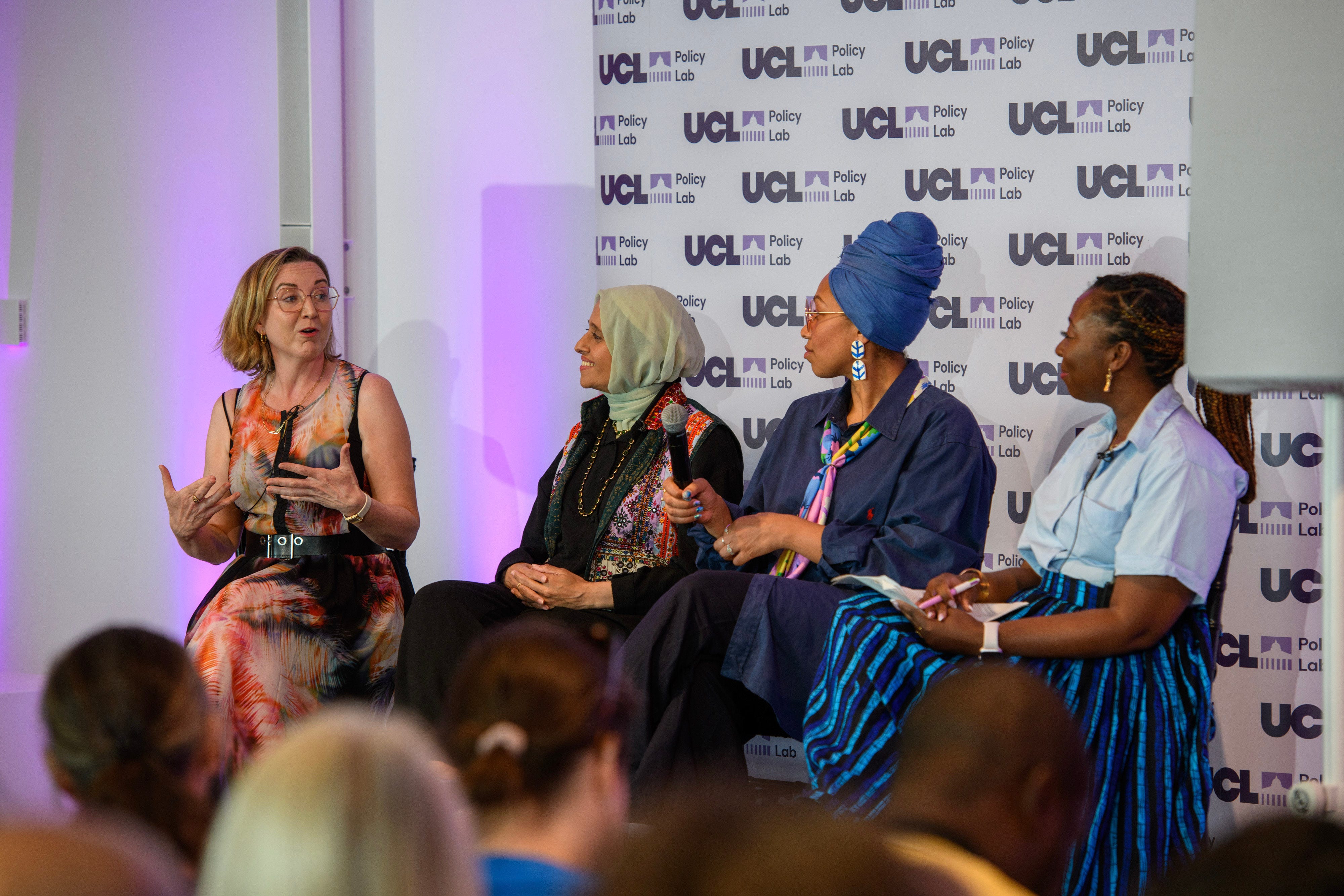
It may therefore seem that we are stuck. Politics in Britain is increasingly defined by two blocs of voters that have vastly different identities and views of the world. But one should not be so defeatist. Earlier this week, UCL Policy Lab convened a panel at V&A East on culture’s role in political change. Your HopeWorks editor took from it a key lesson - social and cultural identity are not fixed, but are continuously shaped by the media and all those around us.
Maxine Thomas-Asante, chair of the panel and the lead of Power of Pop Fund, argued that culture is not downstream of politics but upstream of it - it is the place where meaning is contested before institutions ever catch up.
Marya Bangee, a novelist and an American observer of Britain’s cultural moment, sharpened it into a warning. If culture is where we learn who we are, then the stories a society tells itself are not neutral entertainment — they shape its political instincts. Her constructive challenge, posed as an outsider, was that Britain needs to tell a richer story about itself — to articulate the depth and plurality of its own culture rather than ceding that ground. It is a striking thing to hear from an American: that Britain has a story worth telling and has not been telling it.
The task, then, is not to win the culture war but to refuse its terms — to build an identity that looks forward rather than back, that treats Britain’s pluralism as a source of common life rather than a line of division, and that offers people something to belong to other than grievance. That is a project of hope, in the most practical sense: the deliberate construction of a future worth sharing. It is also, not incidentally, the one terrain on which the populist right has no good answer.
Yassmin Abdel-Magied, the Sudanese-born writer and screenwriter, is in some ways the living answer to that challenge. A former engineer turned author, she joined the Emmerdale writing team through ITV's Original Voices scheme, and her novel At Sea places a Muslim woman of colour at the centre of a thriller set on an oil rig — a world drawn from her own career. Her work does precisely what Bangee called for: it widens whose stories count as British stories, not as a special case but as the ordinary texture of national life, told as it is lived now rather than in nostalgic retrospect.
Recommendations
See — The Music is Black: A British Story at V&A East. An exhibition tracing how Black British music has shaped the country’s wider culture and identity — exactly the richer story of Britain that Bangee called for.
(Re)watch — Mary Queen of Scots, Josie Rourke’s film. A reminder of what she spoke to at the panel: telling a classic story with a deliberate, contemporary take, and finding room to make pointed choices within a familiar frame.
Read — At Sea by Yassmin Abdel-Magied. The panellist's 2026 novel puts a Muslim woman of colour at the centre of a thriller set on an oil rig — exactly the kind of widening of British storytelling the evening called for.
Long read — Forget the World Cup. Culture is becoming more fragmented. The Economist. A great piece on how culture is both getting more globalised and more fragmented.
HopeWorks is a UCL Policy Lab initiative. If you have ideas or work you’d like us to feature, get in touch.